




TL;DR
Tax Deducted at Source (TDS) is one of the most important compliance requirements under the Income Tax Act in India. Businesses responsible for deducting TDS must deduct tax at the applicable rates, deposit it within the prescribed timelines, file quarterly TDS returns, and issue TDS certificates to deductees.
Failure to comply can result in interest, penalties, disallowance of expenses, and notices from the Income Tax Department. This guide explains the complete TDS compliance process in simple language to help businesses remain compliant in 2026.
What is TDS?
Tax Deducted at Source (TDS) is a mechanism through which tax is collected at the source of income. Instead of collecting tax only at the time of filing the income tax return, the government requires specified persons to deduct tax when making certain payments.
The deducted amount is deposited with the government on behalf of the recipient, who can later claim credit while filing their income tax return.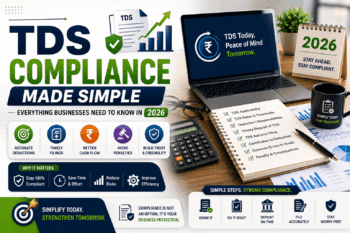
TDS improves tax collection efficiency, ensures regular revenue for the government, and promotes better tax compliance across businesses.
Why TDS Compliance is Important
Many businesses view TDS as just another statutory filing requirement. However, proper TDS compliance offers significant benefits beyond avoiding penalties.
Timely compliance helps businesses:
- Avoid interest and late fees.
- Maintain accurate financial records.
- Improve vendor relationships.
- Ensure seamless tax assessments.
- Claim allowable business expenses.
- Reduce the risk of tax notices.
- Build credibility with stakeholders and auditors.
A robust TDS compliance process also strengthens the overall financial governance of the business.
Who is Required to Deduct TDS?
The obligation to deduct TDS depends on the nature of the payment, the applicable provisions of the Income Tax Act, and prescribed thresholds.
Entities commonly required to deduct TDS include:
- Private Limited Companies
- Limited Liability Partnerships (LLPs)
- Partnership Firms
- Proprietorship Businesses (subject to applicable provisions)
- Government Departments
- Trusts and Societies (where applicable)
- Startups
- Educational Institutions
- Hospitals
- Corporate Employers
Businesses should review each payment carefully to determine whether TDS provisions apply.
Common Payments on Which TDS May Apply
TDS may be applicable on several categories of payments, including:
| Nature of Payment | Typical Examples |
|---|---|
| Salary | Employee salaries and bonuses |
| Professional Fees | CA, lawyer, consultant, architect |
| Contractor Payments | Civil works, maintenance, outsourcing |
| Rent | Office premises, machinery, equipment |
| Commission | Sales commission and brokerage |
| Interest | Interest other than specified exemptions |
| Dividend | Where applicable under tax provisions |
| Purchase Transactions | Certain specified transactions under applicable provisions |
The applicable TDS section, threshold, and rate vary depending on the nature of the transaction and prevailing tax laws.
Businesses should verify the latest provisions before deducting tax.
Step-by-Step TDS Compliance Process
Step 1: Identify Transactions Liable for TDS
The first step is identifying payments that attract TDS.
Review every vendor payment and determine:
- Nature of payment
- Applicable threshold
- Relevant TDS provision
- Applicable deduction rate
- Vendor’s PAN availability
This prevents both under-deduction and excess deduction.
Step 2: Deduct TDS at the Correct Time
TDS is generally required to be deducted at the earlier of:
- Credit of the amount to the payee’s account, or
- Actual payment,
subject to the relevant provision of the Income Tax Act.
Deducting TDS at the correct time helps avoid interest and compliance issues.
Step 3: Deposit the TDS with the Government
After deduction, the amount must be deposited within the prescribed due date.
Businesses should:
- Use the correct challan.
- Verify TAN details.
- Select the correct assessment year.
- Match payment details with accounting records.
- Retain challan acknowledgements for future reference.
Proper reconciliation between books of accounts and TDS payments reduces the likelihood of errors during return filing.
Step 4: File Quarterly TDS Returns
Depositing TDS is only one part of the compliance process. Every deductor must also file TDS returns within the prescribed due dates.
A TDS return typically contains:
- Deductor details
- Deductee details
- PAN information
- Nature of payment
- Amount paid
- TDS deducted
- TDS deposited
- Challan details
Accurate reporting is essential because any mismatch between deposited tax and the return may lead to notices or delay the deductee’s ability to claim TDS credit.
Businesses should reconcile their books, challans, and deductee records before filing returns.
Step 5: Issue TDS Certificates
After filing the TDS return, the deductor must issue the appropriate TDS certificate to the deductee within the prescribed timeline.
These certificates allow recipients to:
- Claim TDS credit while filing their Income Tax Return (ITR).
- Verify tax deductions.
- Reconcile taxes with their Annual Information Statement (AIS) and tax records.
Delayed issuance of TDS certificates can create inconvenience for vendors, employees, and consultants while also exposing the deductor to compliance issues.
Important TDS Due Dates
Timely compliance is critical to avoid interest and penalties.
Businesses should monitor key activities throughout the year, including:
| Compliance Activity | Frequency |
|---|---|
| TDS Deduction | At the time prescribed under applicable provisions |
| Deposit of TDS | Monthly (within prescribed due dates) |
| TDS Return Filing | Quarterly |
| TDS Certificate Issuance | After filing applicable TDS returns |
| Annual Reconciliation | Before financial year-end |
Since statutory due dates may change through government notifications, businesses should regularly verify the latest compliance calendar.
Common TDS Compliance Mistakes
Many businesses receive notices because of avoidable mistakes rather than intentional non-compliance.
Some of the most common errors include:
Incorrect TDS Rate
Applying an incorrect rate can result in short deduction or excess deduction, both of which may require corrective action.
Failure to Obtain PAN
If the deductee’s PAN is unavailable or incorrect, higher TDS provisions may apply under the Income Tax Act.
Always verify PAN details before processing payments.
Missing Due Dates
Late deduction, delayed deposit, or late filing can lead to:
- Interest
- Late filing fees
- Penalties
- Compliance notices
Incorrect Challan Details
Errors in TAN, assessment year, challan identification, or payment details often create reconciliation issues.
Double-check all information before submitting payments.
Poor Vendor Documentation
Maintain updated records for every vendor, including:
- PAN
- Address
- Contact details
- Bank details
- Agreements
- Nature of services
Proper documentation simplifies TDS compliance and future audits.
Lack of Reconciliation
Businesses should periodically reconcile:
- Books of accounts
- TDS returns
- Challans
- Vendor ledgers
- Form 26AS/AIS records (where applicable)
Regular reconciliation helps identify discrepancies early.
Consequences of TDS Non-Compliance
Ignoring TDS obligations can have significant financial and legal implications.
Possible consequences include:
- Interest on delayed deduction or payment
- Late filing fees for delayed TDS returns
- Penalties under applicable provisions
- Disallowance of certain business expenses in specified cases
- Income Tax Department notices
- Increased scrutiny during assessments
- Additional administrative and compliance costs
A proactive compliance process is far more cost-effective than addressing notices and corrections later.
Best Practices for Effective TDS Compliance
Successful businesses treat TDS compliance as a routine financial process rather than a last-minute activity.
Consider adopting these practices:
- Create a monthly TDS compliance calendar.
- Maintain updated vendor master records.
- Verify PAN before making payments.
- Automate accounting and payroll systems where possible.
- Reconcile TDS data every month.
- Review deductions before processing payments.
- Retain challans and supporting documents securely.
- Conduct periodic internal compliance reviews.
- Seek professional guidance for complex transactions.
- Stay updated on changes in tax laws and compliance requirements.
These practices reduce the likelihood of errors and improve overall financial governance.
TDS Compliance Checklist for Businesses
Use this checklist to ensure your business remains compliant:
| Task | Status |
|---|---|
| Identify payments liable for TDS | ☐ |
| Verify applicable TDS provisions | ☐ |
| Collect and verify PAN details | ☐ |
| Deduct TDS correctly | ☐ |
| Deposit TDS within due dates | ☐ |
| File quarterly TDS returns | ☐ |
| Issue TDS certificates | ☐ |
| Reconcile books with TDS records | ☐ |
| Maintain supporting documentation | ☐ |
| Conduct periodic compliance reviews | ☐ |
Why Professional TDS Compliance Matters
As businesses grow, the volume and complexity of transactions also increase.
Professional assistance can help businesses:
- Determine the correct TDS applicability.
- Apply the appropriate deduction rates.
- Ensure timely deposit of TDS.
- File accurate quarterly returns.
- Handle corrections and revised returns when necessary.
- Reconcile TDS records with accounting books.
- Respond to tax notices efficiently.
- Reduce compliance risks through periodic reviews.
Working with an experienced Chartered Accountant allows business owners to focus on growth while maintaining strong tax compliance.
Conclusion
TDS compliance is more than a statutory obligation—it is a critical component of sound financial management.
From identifying applicable transactions and deducting tax correctly to depositing TDS, filing returns, issuing certificates, and maintaining accurate records, every step contributes to a compliant and transparent business.
Businesses that establish a structured TDS compliance process are better positioned to avoid penalties, strengthen stakeholder confidence, and streamline tax reporting.
Rather than treating compliance as a year-end task, make TDS management a regular part of your financial operations.
6. FAQ SECTION
1. What is TDS compliance?
Answer: TDS compliance refers to the process of deducting, depositing, reporting, and maintaining records of Tax Deducted at Source as required under Indian tax laws.
2. Who is responsible for deducting TDS?
Answer: The person or entity making specified payments is generally responsible for deducting TDS.
3. What happens if a business does not deduct TDS?
Answer: Failure to deduct TDS can result in interest, penalties, and compliance issues.
4. What are the major TDS payments businesses should track?
Answer: Businesses should monitor salary, professional fees, contractor payments, rent, commission, and other specified payments.
5. How often should businesses file TDS returns?
Answer: TDS returns are generally filed quarterly.
6. Can TDS returns be corrected after filing?
Answer: Yes, correction statements can generally be filed for eligible errors.
7. Why do businesses need professional help for TDS compliance?
Answer: Professional support helps reduce errors and compliance risks.
8. Is TDS applicable to startups and small businesses?
Answer: Yes, startups and small businesses may have TDS obligations depending on their transactions.