




TL;DR
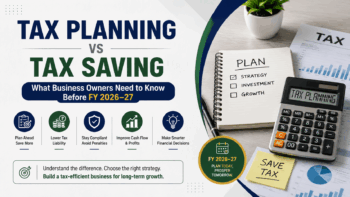
Many Indian business owners treat tax planning and tax saving as the same thing — but they are fundamentally different.
- Tax saving is usually reactive and deduction-focused.
- Tax planning is proactive, strategic, and linked to long-term business growth.
Businesses entering FY 2026–27 need more than last-minute deductions. They need structured financial planning that improves:
- Profitability
- Cash flow
- Compliance
- Capital efficiency
- Investor readiness
This guide explains the difference between tax planning and tax saving, common business mistakes, and practical strategies Indian SMEs can use to optimize taxes legally and strategically.
Why Business Owners Confuse Tax Planning with Tax Saving
For many SMEs and founders, taxation becomes important only near:
- March closing
- Advance tax deadlines
- Return filing season
As a result, businesses often rush into:
- Insurance purchases
- Tax-saving investments
- Unplanned expenses
- Last-minute accounting adjustments
This is tax saving — not tax planning.
The problem is that reactive tax decisions may reduce taxes temporarily but rarely improve the financial health of the business.
Strategic businesses view taxation as part of:
- Financial planning
- Business structuring
- Investment strategy
- Expansion planning
- Compliance management
That is where proper tax planning creates long-term value.
What Is Tax Saving?
Tax saving refers to actions taken primarily to reduce taxable income or tax liability.
These actions are often:
- Short-term
- Deduction-focused
- Deadline-driven
Common Tax Saving Activities
For Businesses
- Claiming depreciation
- Investing in eligible assets
- Employee benefit structuring
- Section-based deductions
- Capital expenditure timing
For Individuals & Founders
- ELSS investments
- Insurance premiums
- Tax-saving FDs
- PPF contributions
The Limitation of Tax Saving
Tax saving alone does not:
- Improve operational efficiency
- Optimize business structure
- Reduce long-term tax burden
- Improve financial forecasting
It simply reduces immediate taxes payable.
What Is Tax Planning?
Tax planning is the strategic process of organizing business finances to legally minimize tax liability while supporting growth and compliance.
It involves:
- Business structuring
- Revenue planning
- Expense optimization
- Cross-border taxation strategy
- GST efficiency
- Investment planning
- Succession planning
Effective Tax Planning Focuses On:
- Long-term profitability
- Risk reduction
- Cash flow management
- Compliance optimization
- Investor confidence
This is why mature businesses start tax planning at the beginning of the financial year — not at the end.
Tax Planning vs Tax Saving: Key Differences
| Factor | Tax Saving | Tax Planning |
|---|---|---|
| Approach | Reactive | Strategic |
| Timeline | Short-term | Long-term |
| Objective | Reduce current tax | Optimize overall taxation |
| Focus | Deductions | Financial structure |
| Business Impact | Limited | High |
| Compliance Efficiency | Moderate | Strong |
| Growth Alignment | Weak | Strong |
Why Reactive Tax Saving Hurts Business Growth
Many SMEs unknowingly create financial inefficiencies by focusing only on tax-saving products or deductions.
Common Problems Include
1. Poor Cash Flow Allocation
Businesses lock capital into unnecessary instruments just to reduce taxes.
2. Weak Financial Structuring
Improper entity structures can lead to higher tax exposure.
3. Missed Incentives
Businesses often fail to leverage:
- Startup incentives
- Export incentives
- R&D benefits
- MSME advantages
4. Compliance Risks
Poor planning increases:
- Tax notices
- Penalties
- Audit scrutiny
5. Reduced Investor Confidence
Investors prefer businesses with:
- Transparent accounting
- Predictable tax liabilities
- Structured compliance systems
Strategic Tax Planning Areas for FY 2026–27
1. Business Structure Optimization
The tax impact differs significantly between:
- Proprietorship
- LLP
- Partnership
- Private Limited Company
Choosing the wrong structure can increase taxes unnecessarily.
2. GST Planning
Businesses should optimize:
- Input tax credit
- Vendor compliance
- GST reconciliation
- Multi-state registration planning
Proper GST planning directly improves working capital.
3. Salary & Director Remuneration Structuring
Strategic compensation planning helps balance:
- Tax efficiency
- Compliance
- Profitability
4. Capital Expenditure Planning
Timing business purchases strategically can improve:
- Depreciation benefits
- Tax deductions
- Investment efficiency
5. International Tax Planning
Businesses with:
- exports,
- foreign clients,
- overseas subsidiaries,
- transfer pricing exposure
must prepare early for evolving compliance regulations.
Common Tax Mistakes Indian Businesses Make
Delaying Tax Planning Until March
This is one of the most expensive mistakes SMEs make.
Ignoring Advance Tax Strategy
Poor forecasting creates unnecessary interest liabilities.
Weak Documentation
Improper bookkeeping increases compliance risks.
Mixing Personal & Business Expenses
This complicates audits and tax assessments.
Depending Entirely on Manual Systems
Excel-based accounting often creates reconciliation errors.
How SMEs Can Build a Tax-Efficient Business Structure
Step 1: Conduct a Financial Health Review
Review:
- Revenue patterns
- Expense structures
- Tax liabilities
- GST exposure
Step 2: Assess Business Entity Structure
Ensure the current entity aligns with:
- Revenue scale
- Expansion plans
- Investor goals
Step 3: Implement Quarterly Tax Planning
Quarterly reviews improve:
- Cash flow forecasting
- Advance tax management
- Compliance preparedness
Step 4: Automate Accounting & Compliance
ERP and accounting automation improve:
- Accuracy
- Reconciliation
- Reporting
- Audit readiness
Step 5: Work with Strategic Advisors
Businesses growing aggressively require proactive tax guidance rather than annual filing support alone.
MISTRY & SHAH LLP provides tax advisory, audit, compliance, GST, and business consulting services designed to help Indian businesses improve financial efficiency while remaining fully compliant.
Tax Planning Checklist Before FY 2026–27
| Area | Action Item |
|---|---|
| Business Structure | Review tax efficiency |
| GST Compliance | Reconcile ITC monthly |
| Advance Tax | Forecast liabilities quarterly |
| Accounting Systems | Automate reconciliation |
| Investments | Align with business goals |
| Documentation | Maintain audit-ready records |
| Director Compensation | Review tax implications |
| Vendor Compliance | Monitor GST filing consistency |
The Role of Chartered Accountants in Strategic Tax Planning
Modern tax advisory goes far beyond return filing.
Strategic chartered accountants help businesses:
- Reduce tax leakages
- Improve financial controls
- Build scalable compliance systems
- Optimize entity structures
- Prepare for audits and funding
As regulations become more complex in FY 2026–27, proactive advisory support becomes increasingly important for growth-stage businesses.
Conclusion
Tax saving may reduce taxes temporarily, but tax planning builds long-term financial strength.
Businesses entering FY 2026–27 should focus on:
- Strategic structuring
- Compliance readiness
- Cash flow optimization
- Sustainable tax efficiency
The businesses that win financially are not necessarily the ones paying the least tax today — but the ones managing taxes strategically over time.
A proactive approach to tax planning helps businesses:
- protect profits,
- improve operational efficiency,
- reduce compliance risks,
- and scale confidently.
For businesses seeking strategic tax advisory, compliance management, GST optimization, audit support, and long-term financial planning, MISTRY & SHAH LLP offers specialized advisory solutions tailored to Indian SMEs and growth-stage businesses.
FAQ SECTION
1. What is the difference between tax planning and tax saving?
Tax saving focuses on reducing immediate tax liability through deductions and exemptions, while tax planning is a long-term strategy to optimize taxes legally and improve financial efficiency.
2. Why is tax planning important for businesses?
Tax planning helps businesses improve profitability, optimize cash flow, reduce compliance risks, and prepare for future growth.
3. Is tax saving enough for SMEs?
No. SMEs also need strategic tax planning to manage expansion, GST, compliance, investments, and long-term financial sustainability.
4. When should businesses start tax planning?
Businesses should ideally begin tax planning at the start of the financial year and review it quarterly.
5. Can poor tax planning affect investor confidence?
Yes. Investors prefer businesses with transparent financials, predictable tax liabilities, and strong compliance systems.
6. How can businesses reduce taxes legally?
Businesses can reduce taxes legally through proper structuring, strategic investments, GST optimization, depreciation planning, and compliance management.
7. What are common tax mistakes businesses make?
Common mistakes include last-minute tax saving, poor bookkeeping, delayed reconciliations, weak documentation, and ignoring advance tax planning.