




TL;DR
For businesses, startups, professionals, and MSMEs, July is an important compliance month with multiple GST, TDS, and Income Tax filing obligations.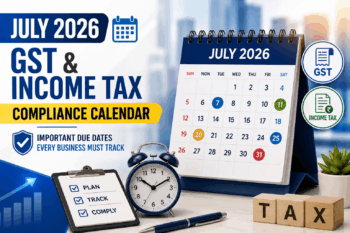
Missing statutory due dates may result in late fees, interest, compliance notices, and unnecessary administrative challenges. Maintaining a monthly compliance calendar helps businesses plan filings in advance, organize financial records, and avoid last-minute errors.
Why Monthly Compliance Tracking Matters
Tax compliance is not limited to filing returns once a year. Businesses are required to meet various monthly, quarterly, and annual obligations under GST and Income Tax laws.
Tracking compliance dates helps businesses:
- Avoid late filing fees
- Reduce interest liabilities
- Improve cash flow planning
- Maintain accurate financial records
- Strengthen regulatory compliance
- Reduce the risk of notices
A structured compliance calendar also allows finance teams to prepare documentation well before filing deadlines.
Important GST Due Dates for July 2026
Note: Due dates may vary depending on the taxpayer’s registration category, turnover, QRMP eligibility, and notifications issued by the Government. Always verify the latest applicable due dates before filing.
10 July 2026 – GSTR-7
GSTR-7 is generally filed by taxpayers required to deduct Tax Deducted at Source (TDS) under GST.
Before filing:
- Verify TDS deducted
- Match supplier information
- Review payment records
- Check GSTIN details
Accurate reporting helps recipients claim eligible credits correctly.
10 July 2026 – GSTR-8
Electronic Commerce Operators required to collect Tax Collected at Source (TCS) generally file GSTR-8.
Before submission:
- Reconcile marketplace transactions
- Verify TCS collections
- Review supplier-wise information
- Match transaction reports
11 July 2026 – GSTR-1 (Monthly Filers)
Businesses filing GSTR-1 monthly should ensure that outward supplies are reported accurately.
Review:
- B2B invoices
- B2C sales
- Credit notes
- Debit notes
- Export invoices
- HSN summaries
Proper invoice reporting helps customers claim Input Tax Credit without delays.
20 July 2026 – GSTR-3B
GSTR-3B is one of the most important monthly GST returns for regular taxpayers.
Before filing GSTR-3B, businesses should verify:
- Outward taxable supplies
- Input Tax Credit (ITC)
- Reverse charge transactions
- GST liability
- Tax payments
- Electronic Cash Ledger and Credit Ledger balances
It is advisable to reconcile GSTR-1 with GSTR-3B to minimise reporting differences.
18 July 2026 – CMP-08 (Where Applicable)
Taxpayers registered under the GST Composition Scheme are generally required to file CMP-08 for the relevant quarter.
Before filing:
- Review turnover details
- Calculate self-assessed tax liability
- Verify tax payments
- Check previous filing records
Accurate reporting helps composition taxpayers remain compliant with GST provisions.
Important Income Tax & TDS Due Dates
Deposit of TDS
Businesses responsible for deducting Tax Deducted at Source (TDS) should ensure timely deposit of TDS deducted during the previous month within the applicable due date prescribed under the Income-tax Act.
Before making payment:
- Verify TDS calculations
- Match challan details
- Confirm deductee information
- Review applicable TDS sections
Quarterly TDS Return Preparation
Although the filing date may fall later, July is an important month for reviewing:
- Salary payments
- Contractor payments
- Professional fees
- Rent payments
- Interest payments
Preparing records in advance reduces last-minute filing errors.
Income Tax Return Filing
For taxpayers whose applicable due date falls in July, ensure that all information is reviewed before filing.
Before submitting the return:
- Compare AIS with Form 26AS
- Verify Form 16
- Review bank statements
- Report all sources of income
- Check deduction claims
- Verify refund bank account
- Complete return verification after filing
Early filing provides sufficient time to correct any discrepancies.
Monthly Compliance Checklist
Every business should complete the following before month-end:
✔ Record all sales transactions
✔ Update purchase records
✔ Reconcile bank accounts
✔ Match GST Input Tax Credit
✔ Review vendor invoices
✔ Verify customer invoices
✔ Deposit applicable taxes on time
✔ Update accounting books
✔ Review payroll records
✔ Maintain statutory documents
✔ Check pending notices or communications
✔ Back up accounting data
A monthly checklist reduces compliance risks and improves financial discipline.
Common Filing Mistakes Businesses Should Avoid
Filing Returns at the Last Minute
Waiting until the due date increases the risk of:
- Portal congestion
- Missing documents
- Incorrect reporting
- Delayed payments
Plan filings well in advance.
Incorrect GST Reconciliation
Differences between accounting records and GST returns may lead to Input Tax Credit issues.
Regular reconciliation is essential.
Missing TDS Compliance
Failure to deduct or deposit TDS correctly may result in:
- Interest
- Penalties
- Compliance notices
Maintain accurate deduction records throughout the month.
Ignoring Books of Account
Updated accounting records make GST, TDS, and Income Tax compliance significantly easier.
Monthly bookkeeping also supports better financial decision-making.
Not Reviewing Government Notifications
Compliance requirements may change through notifications, circulars, or statutory updates.
Businesses should periodically review official announcements to ensure that the filing process reflects the latest applicable requirements.
Best Practices for Staying Compliant
Businesses can improve compliance by:
- Creating a monthly compliance calendar
- Assigning filing responsibilities
- Maintaining digital records
- Performing monthly reconciliations
- Reviewing financial reports regularly
- Working with qualified tax professionals
A proactive compliance strategy reduces operational risks and improves overall financial management.
Conclusion
Managing GST and Income Tax compliances requires continuous attention throughout the year, not only during return filing season.
By following a structured compliance calendar, maintaining accurate financial records, and preparing documents well before the due dates, businesses can reduce compliance risks, avoid unnecessary penalties, and improve operational efficiency.
A disciplined monthly approach to tax compliance supports long-term business growth and strengthens financial governance.
6. FAQ SECTION
1. Why is a monthly compliance calendar important for businesses?
Answer: It enables businesses to plan GST, TDS, and Income Tax filings in advance, reducing the chances of penalties, interest, and last-minute errors.
2. What happens if GST returns are filed late?
Answer: Timely filing helps businesses maintain compliance, avoid additional costs, and ensure smoother Input Tax Credit reconciliation.
3. Why should businesses reconcile GST returns every month?
Answer: Reconciling invoices, purchases, and Input Tax Credit before filing helps identify discrepancies early and reduces future compliance issues.
4. Should small businesses maintain a compliance calendar?
Answer: Even small businesses have multiple tax and regulatory obligations. A monthly calendar helps ensure that important deadlines are not overlooked.
5. How does bookkeeping help with GST compliance?
Answer: Accurate bookkeeping ensures that sales, purchases, tax payments, and financial records are readily available for reconciliation and return filing.
6. Can a Chartered Accountant help manage monthly compliances?
Answer: Professional support helps businesses maintain accurate records, meet statutory deadlines, and reduce compliance risks.
7. What is the best way to avoid missing compliance due dates?
Answer: Regular bookkeeping, monthly reconciliations, internal reviews, and timely professional assistance can help businesses stay compliant throughout the year.