




TL;DR
Internal Audit for SMEs is no longer just a compliance exercise.
In 2026, businesses are using internal audits to:
- Improve profitability
- Identify revenue leakage
- Reduce fraud risks
- Strengthen internal controls
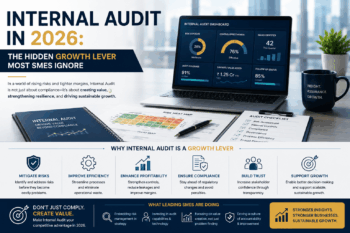
- Improve operational efficiency
- Enhance decision-making
- Support sustainable growth
Many SME owners focus heavily on sales and expansion while overlooking internal inefficiencies that silently erode profits. A structured internal audit can uncover these hidden issues before they become expensive problems.
Why Internal Audit Matters More Than Ever in 2026
The business environment is becoming increasingly complex.
SMEs face challenges such as:
- Rising compliance requirements
- Increased competition
- Digital transformation risks
- Cash flow pressures
- Supply chain disruptions
- Cybersecurity concerns
While large corporations have dedicated risk and audit functions, many SMEs continue operating without any structured internal review mechanism.
This creates blind spots that directly impact profitability and business performance.
Internal Audit for SMEs helps business owners gain visibility into these risks and make informed decisions.
What Is Internal Audit?
Internal audit is an independent evaluation of a company’s processes, controls, risks, and operational effectiveness.
The objective is not simply to identify problems.
A good internal audit helps management:
- Improve efficiency
- Reduce risks
- Protect assets
- Strengthen governance
- Enhance profitability
Think of internal audit as a business health check that identifies hidden weaknesses before they become serious issues.
Common Misconceptions About Internal Audit
Many SME owners believe:
- Internal audits are only for large corporations
- Internal audits are mandatory compliance exercises
- Internal audits are designed to find faults
- Internal audits are expensive
In reality, internal audits provide actionable insights that often generate returns far exceeding their cost.
Internal Audit vs Statutory Audit
| Internal Audit | Statutory Audit |
|---|---|
| Focuses on improving operations | Focuses on financial statement accuracy |
| Conducted throughout the year | Conducted annually |
| Identifies risks and inefficiencies | Provides regulatory assurance |
| Supports management decisions | Supports legal compliance |
| Forward-looking approach | Historical review approach |
Many businesses incorrectly assume statutory audits provide the same value as internal audits.
They do not.
Why SMEs Are Losing Money Without Realizing It
One of the most common findings during Internal Audit for SMEs is revenue leakage.
Revenue leakage can occur through:
- Billing errors
- Inventory losses
- Process inefficiencies
- Weak procurement controls
- Unauthorized discounts
- Duplicate payments
- Inefficient vendor management
For example, a manufacturing company with annual revenue of ₹25 crore may lose 2–5% of revenue through unnoticed operational inefficiencies.
That translates to ₹50 lakh–₹1.25 crore annually.
Without internal audits, these losses often remain hidden.
7 Powerful Benefits of Internal Audit for SMEs
1. Detect Revenue Leakage
Revenue leakage is one of the biggest profit killers.
Internal audits help identify:
- Unbilled sales
- Inventory discrepancies
- Pricing inconsistencies
- Process bottlenecks
Small improvements can significantly impact profitability.
2. Improve Cash Flow Management
Cash flow issues are among the leading causes of SME failures.
An internal audit reviews:
- Receivable cycles
- Payable management
- Working capital efficiency
- Cash handling controls
Better cash flow management improves business stability and growth potential.
3. Reduce Fraud Risks
Fraud is not limited to large corporations.
Common SME fraud risks include:
- Employee fraud
- Vendor collusion
- Expense manipulation
- Inventory theft
- Payroll irregularities
Internal Audit for SMEs helps establish preventive and detective controls that reduce fraud exposure.
4. Strengthen Internal Controls
Weak controls increase business risks.
An internal audit evaluates:
- Approval processes
- Segregation of duties
- Authorization controls
- Documentation procedures
Strong controls improve accountability and operational discipline.
5. Improve Compliance
Regulatory compliance requirements continue to increase.
Internal audits help businesses comply with:
- GST regulations
- Income tax requirements
- Companies Act provisions
- Industry-specific regulations
Proactive compliance reduces penalties and regulatory scrutiny.
6. Support Business Growth
Growing businesses often experience operational complexity.
Internal audits help management:
- Standardize processes
- Scale operations effectively
- Improve reporting systems
- Enhance governance structures
This creates a stronger foundation for growth.
7. Enhance Strategic Decision-Making
Reliable data supports better decisions.
Internal audits provide management with:
- Operational insights
- Performance metrics
- Risk assessments
- Process improvement recommendations
Business owners gain greater confidence when making strategic decisions.
Internal Audit Checklist for SMEs
A practical Internal Audit for SMEs should cover:
Financial Controls
- Bank reconciliations
- Expense approvals
- Cash management
- Accounts receivable review
Operational Controls
- Inventory management
- Procurement procedures
- Vendor controls
- Production processes
Compliance Controls
- GST compliance
- Tax filings
- Statutory obligations
- Regulatory requirements
Risk Management
- Fraud risk assessment
- Cybersecurity controls
- Data protection measures
- Business continuity planning
Industries That Benefit Most from Internal Audits
Although every business benefits, internal audits are particularly valuable for:
Manufacturing Companies
- Inventory controls
- Production efficiency
- Cost management
Trading Businesses
- Procurement controls
- Revenue monitoring
- Vendor management
Service Companies
- Billing accuracy
- Resource utilization
- Client contract management
Startups
- Governance frameworks
- Investor readiness
- Process scalability
How Often Should SMEs Conduct Internal Audits?
The frequency depends on business complexity.
Recommended Guidelines
| Business Type | Audit Frequency |
|---|---|
| Small SME | Annual |
| Growing SME | Semi-Annual |
| Large SME | Quarterly |
| High-Risk Business | Continuous Monitoring |
Regular reviews produce better outcomes than occasional audits.
Choosing the Right Internal Audit Partner
The effectiveness of an audit depends heavily on the expertise of the audit team.
Look for advisors who understand:
- Risk management
- Process improvement
- Industry-specific challenges
- Regulatory compliance
- Business strategy
A good audit partner focuses on value creation rather than merely identifying deficiencies.
Why Internal Audit Will Become a Competitive Advantage in 2026
Businesses that embrace internal audits gain advantages in:
- Operational efficiency
- Risk reduction
- Profitability
- Governance
- Investor confidence
As SMEs become increasingly data-driven and growth-focused, internal audits will shift from being a compliance tool to becoming a strategic growth driver.
The businesses that recognize this shift early will be better positioned for sustainable success.
Conclusion
Internal Audit for SMEs is one of the most overlooked growth tools available to business owners today.
While many businesses invest heavily in sales, marketing, and expansion, they often ignore internal inefficiencies that silently reduce profitability.
A well-executed internal audit helps businesses:
- Protect profits
- Improve controls
- Reduce risks
- Strengthen compliance
- Support long-term growth
In 2026, successful SMEs will not view internal audits as an expense. They will view them as an investment in operational excellence and sustainable business performance.
At MISTRY & SHAH LLP, we help businesses strengthen internal controls, improve governance, identify operational risks, and unlock growth opportunities through professional internal audit and advisory services.
FAQ SECTION
1. What is Internal Audit for SMEs?
Unlike statutory audits, internal audits focus on identifying inefficiencies, revenue leakages, fraud risks, and control weaknesses. They provide actionable recommendations that help SMEs improve performance and reduce business risks.
2. Is internal audit mandatory for SMEs in India?
Internal audit requirements depend on factors such as company structure, turnover, borrowings, and regulatory applicability. However, even when not legally required, SMEs benefit significantly from periodic internal audits because they help improve governance and profitability.
3. How does internal audit improve profitability?
Internal audits uncover:
- Revenue leakage
- Inventory losses
- Duplicate payments
- Inefficient procurement processes
- Poor cash flow controls
Addressing these issues often leads to measurable profit improvements.
4. What is the difference between internal audit and statutory audit?
A statutory audit focuses on financial statement accuracy and legal compliance. Internal audits evaluate risks, controls, operational performance, and process efficiency throughout the year.
5. Can internal audits reduce fraud?
Internal audits strengthen preventive and detective controls, making fraud more difficult to commit and easier to detect. They review approval systems, segregation of duties, expense controls, and inventory management processes.
6. How often should SMEs conduct internal audits?
Growing businesses should ideally conduct internal audits every six months, while larger or higher-risk organizations may benefit from quarterly reviews.
7. Which industries benefit most from internal audits?
Manufacturing, trading, logistics, healthcare, real estate, professional services, and technology companies particularly benefit from internal audits due to their operational complexity and compliance requirements.
8. What should an SME internal audit include?
A comprehensive Internal Audit for SMEs should evaluate:
- Internal controls
- Cash flow management
- Procurement processes
- GST compliance
- Inventory controls
- Fraud risks
- Governance systems