




TL;DR
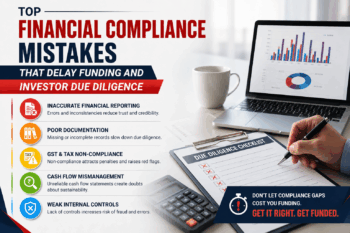
Financial compliance mistakes that delay funding are one of the biggest reasons Indian startups and SMEs face investor concerns during due diligence. Many businesses lose funding opportunities not because their business model is weak, but because their accounting records, tax filings, compliance systems, and financial reporting processes are not investor-ready
Introduction
Raising capital has become more competitive than ever.
Whether a business is seeking:
- Angel investment
- Venture capital
- Bank funding
- Private equity
- Strategic acquisition
investors now conduct extensive financial due diligence before making commitments.
In many cases, businesses assume strong revenue growth alone is enough to secure investment.
It is not.
Investors today prioritize:
- Financial transparency
- Compliance discipline
- Governance structure
- Reporting accuracy
- Operational maturity
A startup with strong growth but poor compliance often appears riskier than a slower-growing company with clean financial systems.
This is why many funding rounds in India face delays during the due diligence stage.
The problem usually is not the business model.
The problem is financial preparedness.
Why Financial Compliance Matters in Fundraising
Investor due diligence is designed to identify risk.
Before investing, buyers and investors want confidence that:
- Financial statements are reliable
- Taxes are properly filed
- Revenue reporting is accurate
- Legal liabilities are manageable
- Internal systems are trustworthy
Compliance failures increase uncertainty.
And uncertainty reduces investor confidence.
This often results in:
- Funding delays
- Lower valuations
- Additional audit requests
- Legal restructuring
- Rejected investment proposals
For SMEs and startups, compliance readiness directly affects business credibility.
What Investors Actually Check During Due Diligence
Most founders underestimate the depth of investor reviews.
A standard due diligence process may include:
| Area | What Investors Review |
|---|---|
| Financial Statements | Accuracy, consistency, audit quality |
| GST & Tax Compliance | Filing status, notices, disputes |
| Payroll & HR Compliance | Employee liabilities |
| ROC & MCA Filings | Corporate governance |
| Contracts & Agreements | Vendor/customer risks |
| Cash Flow Reporting | Financial sustainability |
| Revenue Recognition | Accounting accuracy |
| Internal Controls | Fraud prevention systems |
| Litigation | Pending legal exposure |
Investors are not just evaluating growth.
They are evaluating operational reliability.
Top Financial Compliance Mistakes Businesses Make
1. Poor Bookkeeping and Inconsistent Financial Records
One of the biggest red flags during due diligence is disorganized accounting.
Common problems include:
- Unreconciled bank accounts
- Missing invoices
- Manual spreadsheet errors
- Delayed bookkeeping
- Mismatched financial reports
Investors immediately question:
- Revenue reliability
- Cash flow accuracy
- Financial discipline
Poor bookkeeping creates distrust.
2. Delayed GST and Tax Filings
Tax compliance is one of the first things investors review.
Frequent issues include:
- Delayed GST returns
- Unpaid tax liabilities
- Input tax mismatches
- Pending notices
- TDS filing inconsistencies
These issues create:
- Financial risk
- Regulatory exposure
- Potential penalties
Even profitable companies lose investor confidence due to repeated tax non-compliance.
3. Weak Internal Financial Controls
Many startups operate without structured approval systems.
Common issues:
- No maker-checker process
- Uncontrolled expenses
- Informal vendor payments
- Lack of authorization controls
Weak controls increase fraud risk and operational inefficiency.
Investors prefer businesses with process-driven financial systems.
4. Mixing Personal and Business Expenses
This is extremely common in early-stage businesses.
Founders often:
- Use business accounts for personal spending
- Make undocumented transfers
- Maintain unclear reimbursement records
This creates:
- Tax complications
- Audit concerns
- Governance issues
Investors view it as a sign of poor financial maturity.
5. Lack of Audit Readiness
Many companies scramble to prepare documentation after investor discussions begin.
As a result:
- Records are incomplete
- Reports become inconsistent
- Teams work reactively
Investor confidence drops when businesses appear operationally unprepared.
6. Incorrect Revenue Recognition
Aggressive revenue reporting is a major due diligence concern.
Problems include:
- Premature revenue booking
- Unverified receivables
- Inflated projections
- Unclear accounting policies
These practices may artificially inflate valuation temporarily but damage trust permanently.
7. Missing Legal & Corporate Documentation
Investors expect:
- Shareholding records
- Board resolutions
- Agreements
- Compliance certificates
- Statutory registers
Missing documentation slows transactions significantly.
8. No MIS Reporting System
Modern investors expect:
- Monthly MIS reports
- Cash flow visibility
- Budget vs actual analysis
- KPI dashboards
Businesses without reporting systems appear financially immature.
9. Ignoring Payroll & Labor Compliance
Payroll-related issues often become hidden liabilities.
Common problems:
- Improper salary structuring
- PF/ESI non-compliance
- Contractor misclassification
- Incomplete employee documentation
These create future legal exposure.
10. Dependency on One Accountant or Founder
Many SMEs rely entirely on:
- One accountant
- One finance manager
- Founder-controlled finance operations
This creates continuity and governance risk.
Professional financial systems require process-based operations, not person-dependent operations.
How Compliance Gaps Reduce Business Valuation
Compliance problems directly affect valuation.
Investors reduce valuation when they detect:
- Regulatory risk
- Weak financial visibility
- Operational instability
- Governance concerns
Why?
Because fixing broken financial systems requires:
- Time
- Cost
- Additional audits
- Management restructuring
This increases acquisition risk.
In many deals, valuation adjustments happen due to compliance weaknesses rather than business performance.
The Real Cost of Delayed Due Diligence
Funding delays create serious business consequences.
Operational Impact
- Hiring delays
- Expansion slowdown
- Product launch postponements
Financial Impact
- Reduced cash runway
- Higher borrowing dependence
- Emergency fundraising
Strategic Impact
- Competitor advantage
- Investor fatigue
- Negotiation weakness
For growing startups, delayed funding can affect long-term scalability.
Investor Readiness Checklist
Before approaching investors, businesses should ensure:
Financial Readiness
- Updated bookkeeping
- Reconciled accounts
- Audited statements
- Clean cash flow records
Tax Compliance
- GST returns filed
- TDS reconciliations completed
- Tax notices resolved
Governance
- MCA filings updated
- Shareholding records maintained
- Agreements documented
Reporting Systems
- MIS dashboards
- Financial forecasts
- Budget tracking
Internal Controls
- Approval workflows
- Expense policies
- Audit trails
How SMEs and Startups Can Build Compliance Systems
Adopt Cloud Accounting
Cloud systems improve:
- Real-time reporting
- Data accessibility
- Reconciliation accuracy
Conduct Internal Audits Regularly
Periodic audits help identify:
- Compliance gaps
- Reporting issues
- Process inefficiencies
before investors discover them.
Build Documentation Discipline
Every transaction should be:
- Properly documented
- Digitally stored
- Easily retrievable
Use Professional Advisors
Experienced financial advisors help businesses:
- Prepare for due diligence
- Improve governance
- Optimize reporting
- Reduce compliance risk
Role of Professional Financial Advisors
Professional advisory firms support businesses with:
- Due diligence preparation
- Financial audits
- Compliance management
- Virtual CFO services
- Investor reporting
- Financial structuring
For growing businesses, proactive compliance management is no longer optional.
It is part of building investor confidence.
Conclusion
Most funding delays are preventable.
Businesses often focus heavily on:
- Pitch decks
- Revenue growth
- Market expansion
while ignoring the financial infrastructure investors actually evaluate.
Strong compliance systems create:
- Faster due diligence
- Higher investor confidence
- Better valuation outcomes
- Reduced transaction risk
In 2026, investor readiness is not just about growth metrics.
It is about operational credibility.
Businesses that prioritize compliance early position themselves for smoother fundraising, stronger governance, and sustainable long-term growth.
FAQ SECTION
What delays investor due diligence?
Poor financial records, missing compliance documents, unresolved tax issues, and weak reporting systems commonly delay due diligence.
Why do startups fail investor due diligence?
Many startups fail due diligence because of accounting inconsistencies, compliance gaps, governance issues, or unclear financial reporting.
What documents do investors check during due diligence?
Investors review financial statements, GST filings, tax records, contracts, payroll compliance, shareholding documents, and internal controls.
How can businesses prepare for investor funding?
Businesses should maintain updated accounting records, complete compliance filings, conduct internal audits, and organize financial documentation.
What are common compliance mistakes startups make?
Delayed GST filing, poor bookkeeping, missing legal documents, and weak internal controls are among the most common mistakes.
Does compliance affect startup valuation?
Yes. Compliance gaps increase investor risk perception and often reduce business valuation.
How long does investor due diligence take?
Depending on business complexity, due diligence may take several weeks to multiple months.
Why are internal audits important before fundraising?
Internal audits identify financial and operational risks before investors detect them during due diligence.