




TL;DR
FEMA Compliance Checklist is the foundation of successful international expansion. Whether you are establishing a foreign subsidiary, investing overseas, or expanding into global markets, this FEMA Compliance Checklist will help you stay compliant with RBI regulations and avoid costly penalties.
FEMA Compliance Checklist should be one of the first items every Indian business reviews before expanding overseas.
Whether you are:
-
Setting up a foreign subsidiary
-
Acquiring an overseas company
-
Opening an international office
-
Investing in foreign operations
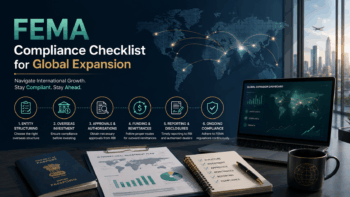
you must comply with the Foreign Exchange Management Act (FEMA) and related RBI regulations.
Failure to comply can result in:
-
Monetary penalties
-
Regulatory scrutiny
-
Delayed transactions
-
Operational disruptions
This guide explains the FEMA compliance checklist every Indian business should follow before international expansion.
Why FEMA Compliance Matters Before International Expansion
Indian businesses are increasingly exploring global markets.
Today, companies from Ahmedabad, Mumbai, Bengaluru, and other major business hubs are:
-
Acquiring overseas businesses
-
Establishing subsidiaries abroad
-
Expanding export operations
-
Raising international capital
However, international growth creates additional regulatory responsibilities.
One of the most important compliance frameworks governing overseas transactions is FEMA.
Businesses that ignore FEMA requirements often encounter:
-
Regulatory notices
-
Delayed approvals
-
Banking restrictions
-
Financial penalties
A structured FEMA compliance strategy helps avoid these issues.
What is FEMA?
The Foreign Exchange Management Act, 1999 (FEMA), regulates foreign exchange transactions involving India.
The law governs:
-
Foreign investments
-
Overseas investments
-
Cross-border remittances
-
Export proceeds
-
Import payments
-
International financial transactions
The Reserve Bank of India (RBI) administers FEMA regulations through various rules, circulars, and directions.
Objectives of FEMA
The primary objectives include:
-
Facilitating external trade
-
Promoting orderly foreign exchange markets
-
Regulating cross-border financial transactions
-
Supporting international economic integration
Unlike the older FERA regime, FEMA focuses on management rather than control.
Why FEMA Matters for Growing Businesses
As businesses expand internationally, foreign exchange transactions become more frequent.
Examples include:
-
Investment in foreign subsidiaries
-
Cross-border acquisitions
-
International joint ventures
-
Overseas branch offices
-
Global treasury functions
Each transaction may trigger specific FEMA obligations.
Understanding Overseas Direct Investment (ODI)
One of the most important FEMA concepts for expanding businesses is Overseas Direct Investment (ODI).
ODI refers to investments made by Indian entities into foreign entities.
Examples include:
-
Setting up a subsidiary in Singapore
-
Acquiring a company in the UAE
-
Purchasing equity in a foreign business
-
Establishing a branch office abroad
ODI regulations determine:
-
Investment limits
-
Reporting obligations
-
Permissible structures
-
Financial commitment calculations
Businesses should evaluate ODI implications before making overseas commitments.
FEMA Compliance Checklist for International Expansion
1. Evaluate Business Eligibility
Before making an overseas investment, assess whether the company is eligible under current FEMA regulations.
Review:
-
Corporate structure
-
Regulatory status
-
Existing foreign investments
-
Financial standing
Ensure there are no restrictions affecting overseas expansion plans.
2. Review ODI Limits
Investment limits must be carefully evaluated.
Key considerations include:
-
Net worth calculations
-
Financial commitment thresholds
-
Equity investments
-
Loans and guarantees
Improper calculations are one of the most common compliance issues.
3. Assess Total Financial Commitment
Financial commitment extends beyond equity contributions.
Businesses must consider:
-
Corporate guarantees
-
Performance guarantees
-
Loans to foreign entities
-
Other forms of support
Many organizations underestimate their total exposure.
4. Conduct Due Diligence on Foreign Entities
Before investing overseas, perform proper due diligence.
Review:
-
Legal structure
-
Regulatory standing
-
Tax compliance
-
Financial statements
-
Ownership details
Poor due diligence increases both commercial and compliance risks.
5. Prepare Documentation
Maintain comprehensive records including:
-
Board resolutions
-
Share subscription agreements
-
Valuation reports
-
Investment agreements
-
Due diligence reports
-
Banking documentation
Strong documentation supports future audits and reporting requirements.
6. Complete RBI Reporting Requirements
RBI reporting is one of the most critical FEMA obligations.
Businesses must ensure timely filing of applicable forms and disclosures.
Common reporting requirements include:
-
ODI filings
-
Foreign asset reporting
-
Annual performance reports
-
Financial commitment disclosures
Late reporting can trigger regulatory scrutiny.
7. Monitor Ongoing Compliance
Compliance does not end after investment completion.
Businesses must continuously monitor:
-
Reporting deadlines
-
Financial commitments
-
Subsidiary performance
-
Regulatory updates
Ongoing compliance is often where organizations face challenges.
Key FEMA Reporting Requirements
A typical overseas investment may require reporting related to:
| Compliance Area | Purpose |
|---|---|
| ODI Reporting | Overseas investment disclosure |
| APR Filing | Annual performance reporting |
| Financial Commitment Reporting | Exposure monitoring |
| Foreign Asset Reporting | Regulatory transparency |
| Banking Documentation | Transaction verification |
Each reporting obligation should be tracked through a compliance calendar.
Common FEMA Mistakes Businesses Make
Ignoring ODI Regulations
Many businesses assume overseas investments only require commercial approvals.
However, FEMA obligations remain equally important.
Delayed Reporting
Missed reporting deadlines are among the most common compliance failures.
Weak Documentation
Insufficient records often create challenges during audits and investigations.
Miscalculating Financial Commitment
Companies frequently overlook guarantees and indirect commitments.
Lack of Compliance Monitoring
Many organizations focus on transaction execution but fail to maintain ongoing compliance.
Penalties for FEMA Non-Compliance
Non-compliance may result in:
-
Financial penalties
-
Compounding proceedings
-
Regulatory scrutiny
-
Banking restrictions
-
Delayed approvals
In serious cases, businesses may face prolonged regulatory disputes.
The cost of prevention is typically far lower than the cost of remediation.
FEMA Compliance Best Practices
Establish Internal Compliance Controls
Create clear approval workflows for foreign transactions.
Maintain a FEMA Compliance Calendar
Track all filing and reporting deadlines.
Conduct Periodic Reviews
Review overseas investments annually.
Align Finance and Legal Teams
Cross-border transactions often require coordinated oversight.
Seek Professional Advisory Support
Professional guidance reduces compliance risks and improves transaction efficiency.
How Professional Advisory Support Helps
International expansion involves more than market opportunity.
Businesses must navigate:
-
FEMA regulations
-
RBI reporting
-
Tax considerations
-
Corporate structuring
-
Regulatory filings
Professional advisors help organizations:
-
Structure overseas investments
-
Manage ODI compliance
-
Prepare regulatory filings
-
Monitor reporting obligations
-
Reduce compliance risks
MISTRY & SHAH LLP assists businesses with FEMA advisory, international taxation, regulatory compliance, cross-border structuring, and overseas expansion support.
A proper FEMA Compliance Checklist helps businesses avoid costly compliance mistakes during international expansion.
Conclusion
FEMA Compliance Checklist planning should begin long before an overseas investment is executed.
Businesses expanding internationally must evaluate:
-
ODI regulations
-
RBI reporting requirements
-
Financial commitments
-
Documentation standards
-
Ongoing compliance obligations
A proactive compliance framework not only reduces regulatory risks but also supports smoother international growth.
As Indian businesses continue expanding globally, strong FEMA compliance will remain a critical component of successful cross-border operations.
FAQ SECTION
1. What is FEMA compliance for Indian businesses?
Indian businesses making overseas investments, opening foreign subsidiaries, remitting funds abroad, or conducting international transactions must comply with FEMA regulations and RBI reporting requirements. Proper compliance helps avoid penalties, transaction delays, and regulatory scrutiny.
2. Is RBI approval required for overseas investments?
Many overseas investments are permitted under the automatic route subject to prescribed limits and conditions. However, certain transactions may require prior approval depending on the nature, structure, and value of the investment. Businesses should evaluate the applicable FEMA and ODI regulations before proceeding.
3. What is Overseas Direct Investment (ODI)?Short Answer
ODI includes:
- Setting up foreign subsidiaries
- Acquiring overseas companies
- Purchasing foreign equity shares
- Establishing international joint ventures
ODI transactions are governed by FEMA and RBI regulations and require appropriate reporting and compliance.
4. What documents are required for FEMA compliance?
Common documents include:
- Board resolutions
- Share subscription agreements
- Valuation reports
- Financial statements
- Investment agreements
- Banking documents
- Due diligence reports
Maintaining proper records is essential for regulatory compliance and future audits.
5. What are the penalties for FEMA non-compliance?
Penalties vary depending on the nature and severity of the violation. Delayed reporting, incorrect disclosures, and unauthorized transactions can attract scrutiny, compounding proceedings, and financial penalties.
6. Can startups invest in foreign companies?
Eligible startups can invest in overseas businesses provided they comply with ODI regulations, financial commitment rules, reporting requirements, and RBI guidelines.
7. How often should FEMA compliance be reviewed?
Businesses with overseas investments should conduct periodic reviews to ensure:
- Reporting obligations are fulfilled
- Investment structures remain compliant
- Regulatory changes are incorporated
- Financial commitments are properly monitored
8. How can businesses simplify FEMA compliance?
Businesses should maintain compliance calendars, automate reporting reminders, conduct periodic reviews, and engage experienced advisors for complex cross-border transactions.